The European Union's Carbon Border Adjustment Mechanism (CBAM), in force since 1 January 2026, marks a fundamental transformation of global trade relations, especially for energy-intensive sectors such as steel and aluminium production. By putting a price on the carbon emitted during the production of goods imported into the EU, the mechanism turns emissions data from a matter of corporate reporting into a direct financial liability. As Europe moves from simple carbon pricing to comprehensive management of carbon emissions in supply chains, access to its market depends not only on price competitiveness but also on proven environmental performance across the entire production cycle.
For steel and aluminium producers whose supply chains span the globe, CBAM creates both challenges and opportunities. In the short term, it complicates customs clearance and raises costs, which could push prices up until sufficient volumes of affordable low-carbon steel become available. In the long term, it implies a deep realignment of logistics and raw material sourcing as companies seek to minimise carbon payments and stay competitive in the European market.
This shift is not an abstract concept: it is already shaping the strategic decisions of the industry's major players. The second-quarter 2026 earnings reports of ArcelorMittal, Acerinox and Outokumpu show that companies are actively adapting to the new reality, seeking to improve profitability as they progress with growth strategies that include decarbonisation initiatives.
How is CBAM changing the criteria for choosing raw material suppliers?
CBAM is fundamentally changing the criteria for choosing raw material suppliers, turning carbon intensity into a key financial indicator. Previously, the carbon embedded in a product was mainly a matter of sustainability reporting, corporate policy and long-term industrial strategy. Since 1 January 2026, however, CBAM has put a price on the carbon emitted during the production of goods imported into the EU. This means that raw material suppliers with high carbon emissions become less attractive, as their products incur additional charges when imported into the EU.
For steel and aluminium producers that want to export to Europe, choosing suppliers that use low-carbon technologies becomes a critical element of competitiveness. Steel is the most strategically important sector covered by CBAM because of its scale, export orientation and role in downstream industries such as automotive and construction. This forces companies to analyse the carbon footprint of their supply chains carefully, from ore extraction to the final product, and drives investment in green raw material production technologies.
What are the consequences of CBAM for logistics operations and supply routes?
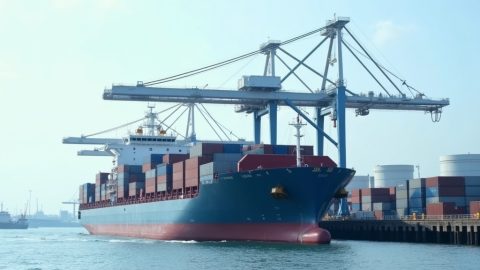
CBAM not only affects the choice of suppliers but also puts significant pressure on logistics operations and supply routes, requiring optimisation and potentially realignment. The increased administrative burden and the need to track carbon emissions accurately at every stage of the supply chain complicate customs clearance. This may change traditional logistics hubs and routes as companies look for ways to reduce the carbon footprint of transport.
For example, damage to two smelters in the Persian Gulf and logistics constraints elsewhere have already caused a shortfall of 2 million metric tonnes in the global aluminium supply chain. Events like these, combined with CBAM requirements, may strengthen the trend towards localising supply or finding alternative, more carbon-efficient logistics solutions. This also highlights the importance of transparent and verified emissions data at every stage of the logistics chain, which can be a challenge for companies working with global supply networks.
What strategies are producers adopting to adapt to CBAM?
Steel and aluminium producers are developing multifaceted strategies to adapt to CBAM requirements, covering technological modernisation, supplier diversification and supply chain optimisation. One key strategy is investing in decarbonising production processes to reduce embedded carbon emissions: switching to renewable energy, using hydrogen in metallurgy or improving carbon capture and storage technologies. Companies such as ArcelorMittal, Acerinox and Outokumpu are already publishing reports reflecting their efforts to improve profitability, often linked to investment in more sustainable production practices.
Another important strategy is the careful analysis and diversification of raw material sources. Producers are actively looking for suppliers with a lower carbon footprint to reduce their CBAM liabilities. At the same time, companies are working to improve the transparency and accuracy of emissions data in their supply chains, since CBAM turns this data into a financial liability. Putting reliable monitoring and reporting systems in place becomes an integral part of the adaptation strategy.
How does CBAM affect global competitiveness and innovation?
CBAM has a significant impact on global competitiveness, creating new challenges for exporters to the EU and driving innovation in decarbonisation. For non-EU countries, CBAM can raise the cost of their products if their production processes are carbon-intensive, making them less competitive in the European market. This gives these countries and their producers an incentive to invest in cleaner technologies to avoid or minimise carbon payments. European producers already covered by the EU ETS may gain an advantage, as CBAM aims to level the playing field between domestic and foreign producers.
The mechanism also acts as a catalyst for innovation in industry. Companies have to find new ways to cut emissions, which leads to the development and adoption of advanced production technologies, alternative materials and optimised energy use. Companies that successfully integrate decarbonisation strategies can not only adapt but also improve their financial performance: ultimately, CBAM turns environmental performance into a key factor of market success. To learn how the mechanism affects global trade policy, read CBAM and carbon markets: how China and India are responding.
Analytical conclusion
The EU's introduction of CBAM is not just a new trade barrier but a comprehensive instrument that is reshaping global supply chains, especially for the steel and aluminium industries. Since 2026, the mechanism has turned carbon emissions into a direct financial liability, forcing producers to reconsider their strategies from raw material selection to logistics. CBAM drives innovation and requires exporters to the EU to offer not only a competitive price but also proven environmental performance. This creates new opportunities for green technologies and suppliers, while increasing the administrative burden and potential costs for those who do not adapt.
Sources
- CBAM – wo Unternehmen heute stehen und was jetzt zu tun ist
- Der neueste EU-Klimaschutz-Versuch schafft ein Bürokratie-Monster
- CBAM: EU-CO2-Zoll verändert Welthandel 2026
- CBAM: Importeure von Stahl, Alu und Zement zahlen jetzt CO₂-Aufpreis
- Was ist der CO2-Grenzausgleichsmechanismus (CBAM) und betrifft er den Stahlhandel
- CO2-Grenzausgleich: EU erweitert CBAM auf Stahl und Aluminium
- CBAM-Erweiterung 2028: 180 nachgelagerte Produkte im Überblick
- CBAM 2026: Erfahrungen CO2-Grenzausgleich — Was Importeure jetzt wissen
- CBAM-Reform: Neue Zertifikatspflichten für Stahlimporteure
- EU CBAM 2026: Leitfaden zur CO2-Grenzsteuer für kleine Exporteure
- Grüner Stahl Europa: Thyssenkrupp und Salzgitter — Europas grüne Stahlwette hat ein Marktproblem
- CBAM: Warum der „Zoll auf CO₂" Lieferketten, Einkauf und den EU-Emissionshandel neu ordnet
- PDF: The impact of CBAM on Ukrainian industry (GMK Center, in Ukrainian)
Find out whether CBAM applies to you
Leave your number: in 15 minutes we will tell you, free of charge, whether your products fall under CBAM and what to do next.