CBAM consulting
Free first consultation: in 15 minutes we review your situation and give you a clear answer.
- Whether CBAM applies to your goods
- Which deadlines apply to you
- Indicative cost of preparation
We help you obtain a positive verification opinion — from a free initial consultation to a report that your authorised declarant in the EU can upload to the CBAM Registry without issues.
No obligation · We reply on the same business day
From a free initial consultation to preparing the CBAM report and full support during verification.
Free first consultation: in 15 minutes we review your situation and give you a clear answer.
We calculate actual emissions and prepare the report in line with the CBAM Implementing Regulation, in a format your authorised declarant can upload to the CBAM Registry without issues. Protection against repeated resubmissions and rejections.
More about reporting →We prepare your emissions data so that the report is ready to pass verification on the first submission, without extra clarifications or repeated requests.
More about verification →Building an environmental management system and a technical analysis of production that reduces your carbon footprint and the cost of certificates.
More about ISO 14001 →Answer 2 questions and we will estimate the cost of preparing a report for your number of codes and annual export volume. The exact price is fixed in the contract after a free consultation.
Indicative estimate, not a final price.
What has already happened, what applies now and what to prepare for next. Under each stage, what it means for a Ukrainian supplier.
Exporters submit quarterly reports on embedded emissions. Nothing has to be paid: the EU is collecting data.
Penalty for failing to report: €10–50 per tonne of unreported CO₂ emissions.
We collect and structure data quarterly throughout the year so that the annual declaration is based on up-to-date, verified information. The importer in the EU must hold authorised declarant status, and the emissions data must be confirmed by an accredited verifier.
Without verified data, the buyer calculates your emissions using inflated default values.
For the declared volume of emissions, the importer buys CBAM certificates at the price of EU ETS allowances. A carbon price already paid in Ukraine is deducted.
The more accurate your data, the fewer certificates the buyer has to purchase and the cheaper your products are for them.
A fixed scope of work and clear responsibility at every stage. You see exactly what is being done and which documents you receive at the end.
We determine which goods and CN codes fall under CBAM and which installations the reporting has to cover.
We collect the required data:
energy consumption, input materials, production processes, precursors.
We calculate specific embedded emissions using the EU methodology instead of inflated default values.
We prepare the CBAM report in XLS and XML formats for the CBAM Registry, so the declarant in the EU can upload it in one click.
We prepare your company for the review by an accredited verifier and support you throughout the audit.
From agricultural holdings to pharmaceuticals: the industries differ, but the EU regulation's requirements are the same for everyone.

An international food, agritech and retail company headquartered in Kyiv, with production facilities in Ukraine and the Balkans.

One of the world's leading companies in the design, manufacture, repair and servicing of gas turbine engines for aircraft and helicopters, as well as industrial gas turbine units.
The leader of Ukraine's pharmaceutical market by sales of medicines in monetary terms (according to Proxima Research).
The exact price depends on the number of CN (UKTZED) codes, production lines and how ready your source data is. We fix it in the contract after free scoping.
One product type, 1 production line, calculation of specific emissions and a report for the CBAM Registry
Extended calculation for 2+ product categories or several production lines
We quote the exact price after a free consultation, with no hidden fees or mark-ups at the CBAM report preparation stage.
We follow how the regulation develops and how it affects Ukrainian exporters and global supply chains.
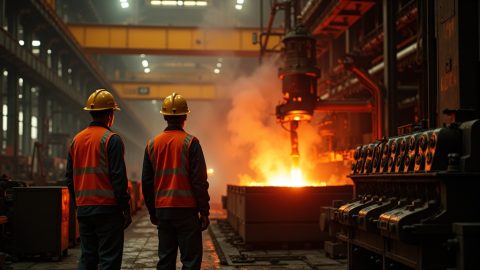
The European Union's introduction of the Carbon Border Adjustment Mechanism (CBAM) is fundamentally changing the landscape of international trade and industrial policy. The mechanism is designed to equalise the carbon costs of imported products.
Read →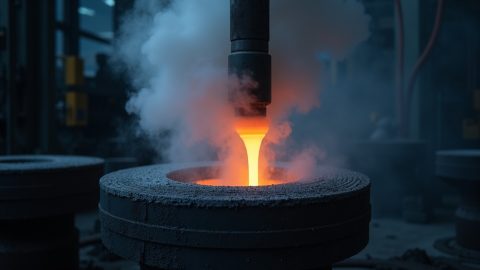
On 1 January 2026, CBAM entered its definitive phase, imposing carbon costs on imports of steel, aluminium and other goods. We look at when modernising production pays off and when buying certificates does.
Read →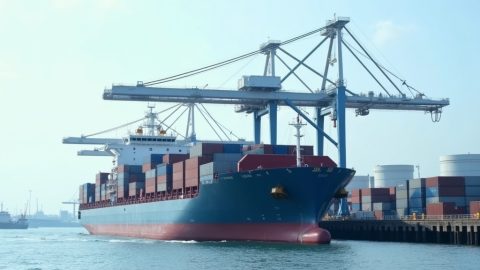
The CBAM definitive period, in force since 1 January 2026, marks a fundamental transformation of global trade relations, especially for energy-intensive sectors such as steel and aluminium production.
Read →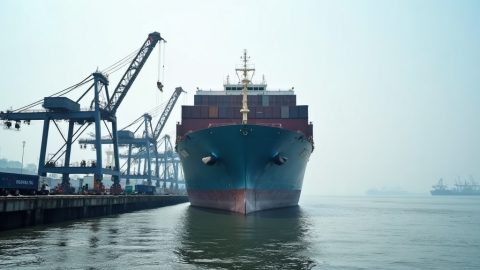
The EU is actively reshaping its trade policy by building climate objectives into new free trade agreements, a direct response to the introduction of CBAM.
Read →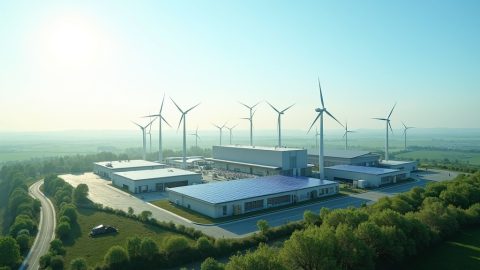
The global industrial landscape is on the verge of significant change, driven by tighter environmental regulation and a growing focus on decarbonisation.
Read →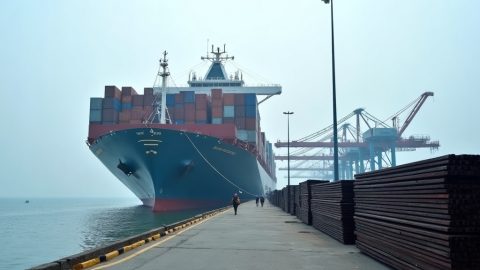
The introduction of CBAM marks a tectonic shift in global trade policy, building environmental standards into commercial relations between the EU and its partners.
Read →The legal obligation rests with the authorised CBAM declarant: the importer or, in certain cases, its indirect customs representative. The data for calculating actual emissions is provided by the producer. From 2026, a de minimis threshold of 50 tonnes per year per importer applies to most CBAM goods; it does not apply to electricity and hydrogen. Where actual emission values are used, they must be calculated using the CBAM methodology and verified by an accredited verifier. We prepare exactly this production data: see our CBAM reporting service.
Since 2023, CBAM has covered carbon-intensive goods: cement, iron and steel, aluminium, electricity, fertilisers, hydrogen and certain products derived from them. A check against the CN codes of your product range gives the precise answer: book a free consultation to find out for your products.
During the transitional period (until the end of 2025), failure to submit a quarterly report was subject to a penalty of €10–50 per tonne of unreported CO₂ emissions. In the definitive period, the penalty is €100 per tonne of emissions for each CBAM certificate not surrendered, indexed to EU inflation, and paying the penalty does not release the declarant from the obligation to surrender the certificates. We cover the latest regulatory changes in our news section.
The legal obligation lies with the importer in the EU. However, it is the producer outside the EU that provides the importer with data on embedded emissions. Without correct data, the importer applies default values, which increases its costs and makes your products more expensive.
The starting budget for a report is from UAH 60,000 for 1 CN code and from UAH 100,000 for 2 or more codes (incl. VAT). The exact price depends on the number of CN (UKTZED) codes, product categories, production lines and how ready your source data is. The price is fixed in the contract after a free consultation: see the budget guide above.
CBAM is part of the European Green Deal, which aims to make the EU climate-neutral by 2050. The list of goods covered by the regulation is expected to grow: follow our CBAM news or ask us directly using the request form.
Send a request or message us: a specialist will contact you on the same business day, assess the scope of work and send you a commercial proposal.